Overthinking Walk & Talk Therapy in Greenwich Park (Greenwich & Blackheath)
Walk & Talk therapy supporting overthinking through movement, perspective-taking, and evidence-based psychological approaches.
A supportive space to reduce mental overload, quiet repetitive thinking, and develop clearer ways of approaching decisions.
Introduction
Overthinking walk and talk therapy in Greenwich Park combines psychological therapy with movement and natural surroundings. Greenwich Park sits between Greenwich (SE10) and Blackheath (SE3), providing a calm environment that can support mental clarity.
Overthinking often involves repetitive analysis, difficulty making decisions, or feeling mentally stuck. Thoughts can feel persistent, making it difficult to switch off or feel confident about next steps.
Walking side-by-side can reduce the intensity often associated with analysing thoughts in a static environment. In addition, movement can help thoughts feel less repetitive and more flexible.
How Walk & Talk Therapy Supports Overthinking
Overthinking is often linked to heightened self-monitoring and cognitive load. Research suggests excessive rumination can increase anxiety and reduce problem-solving efficiency (Nolen-Hoeksema, 2000).
Walking can support cognitive flexibility, helping individuals shift perspective and consider alternative interpretations (Oppezzo & Schwartz, 2014).
Movement can help:
• reduce repetitive thinking
• support clearer decision-making
• improve perspective-taking
• reduce mental fatigue
• support cognitive flexibility
• improve problem-solving
Many individuals find that ideas emerge more naturally while walking compared to sitting still.
Natural Environments & Cognitive Flexibility
Exposure to natural environments has been linked to improved attention and reduced mental fatigue (Berman et al., 2012).
Attention Restoration Theory suggests nature helps replenish cognitive resources required for focused thinking (Kaplan & Kaplan, 1989).
Greenwich Park provides visual openness and reduced environmental pressure. Therefore, individuals often find it easier to step back from repetitive thoughts and consider new perspectives.
Common Overthinking Patterns
Overthinking may involve:
• analysing conversations repeatedly
• difficulty making decisions
• anticipating negative outcomes
• self-doubt
• mental replay of past events
• difficulty switching off
While reflection can be helpful, persistent overthinking can reduce confidence and increase anxiety.
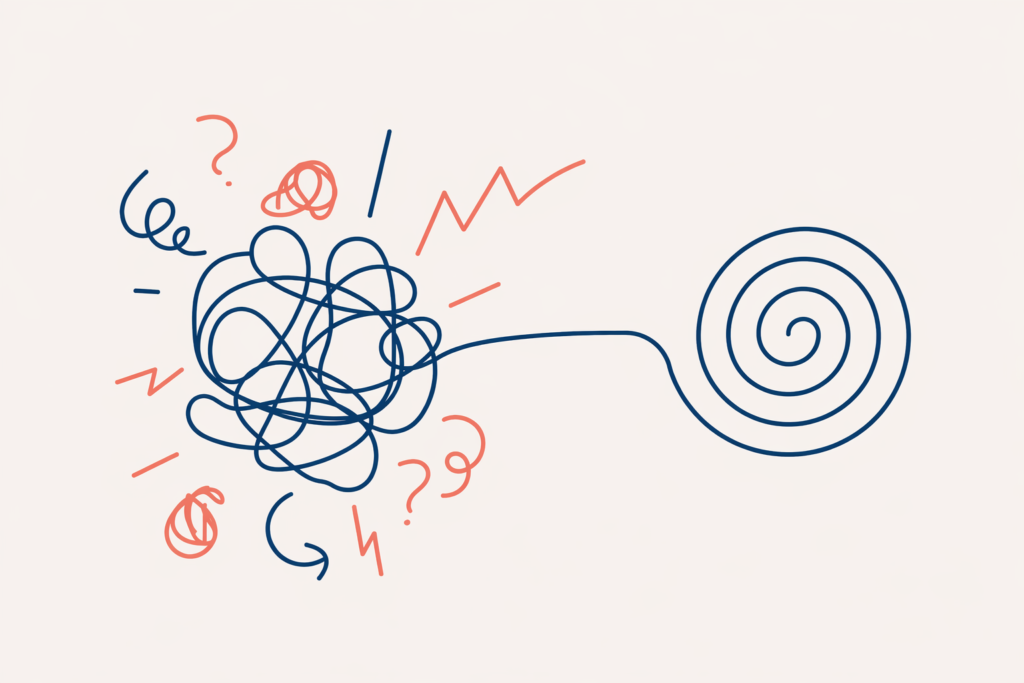
Overthinking Walk & Talk Therapy in Greenwich & Blackheath
Working with me can support clearer thinking and reduced mental overwhelm. Walk and talk therapy takes place in Greenwich Park (SE10/SE3), accessible from both Greenwich and Blackheath.
Sessions are also available online or via telephone, providing flexibility alongside a structured, evidence-based approach.
Movement can support perspective-taking and reduce the sense of feeling mentally stuck.
Explore how walk and talk therapy in Greenwich Park can support reduced overthinking and improved clarity.
Learn more about emotional blocks
Overthinking often overlaps with self-doubt and emotional blocks.
Read more:
Low Self-Esteem, Anxiety & Imposter Syndrome
Academic References
Berman, M. G., Jonides, J., & Kaplan, S. (2012). The cognitive benefits of interacting with nature. Psychological Science, 19(12), 1207–1212.
Kaplan, R., & Kaplan, S. (1989). The experience of nature: A psychological perspective. Cambridge University Press.
Nolen-Hoeksema, S. (2000). The role of rumination in depressive disorders. Journal of Abnormal Psychology, 109(3), 504–511.
Oppezzo, M., & Schwartz, D. L. (2014). Give your ideas some legs: walking improves creative thinking. Journal of Experimental Psychology, 40(4), 1142–1152.